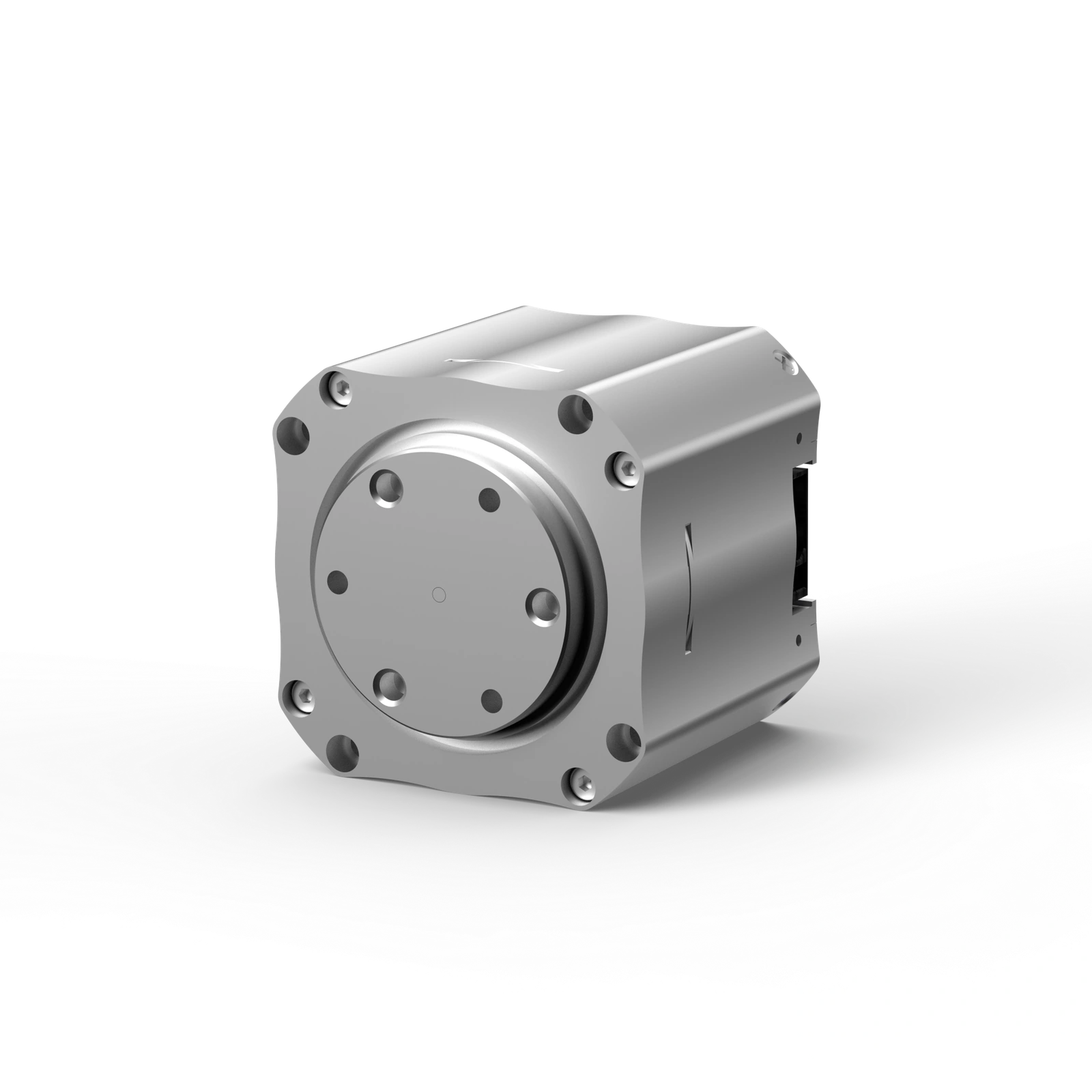
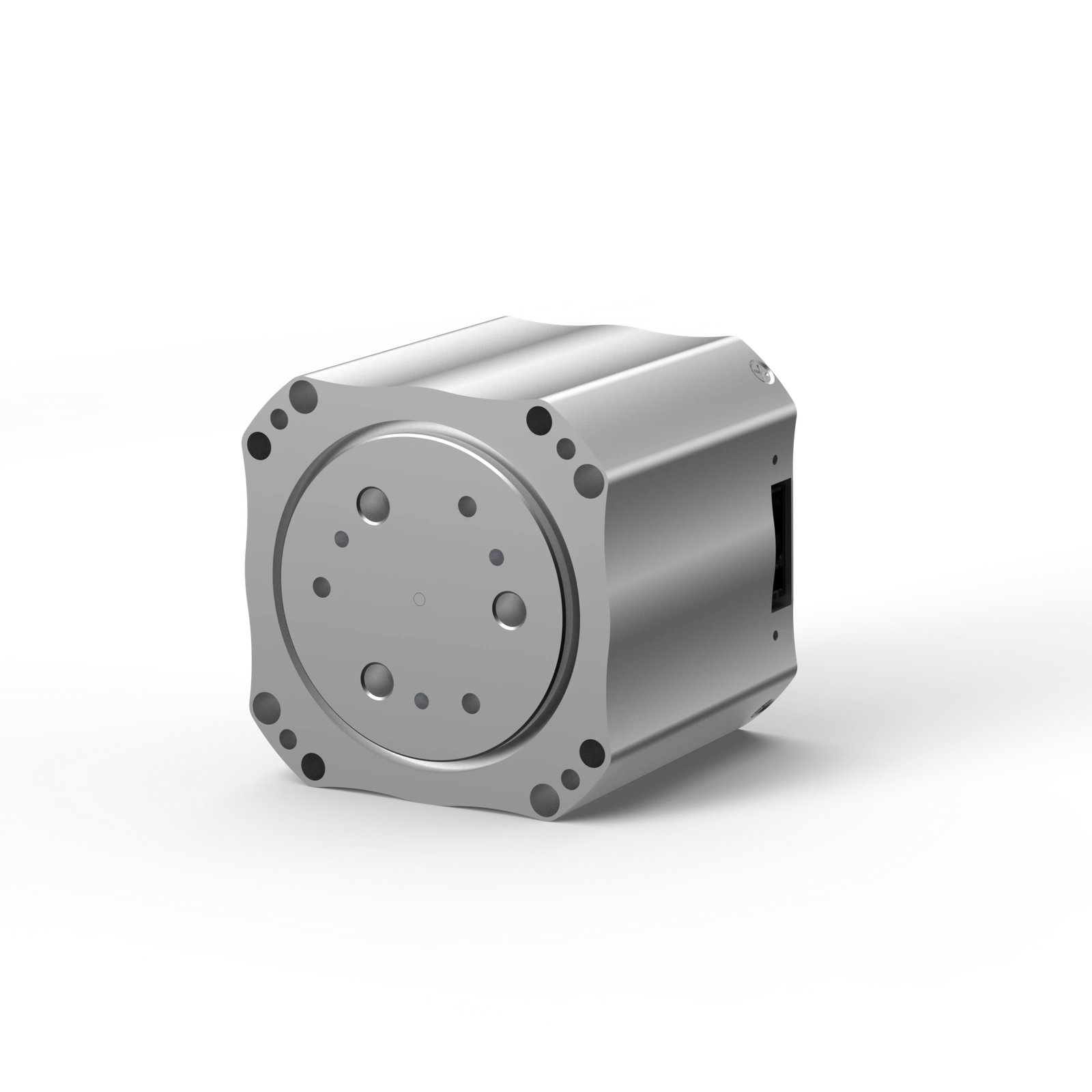
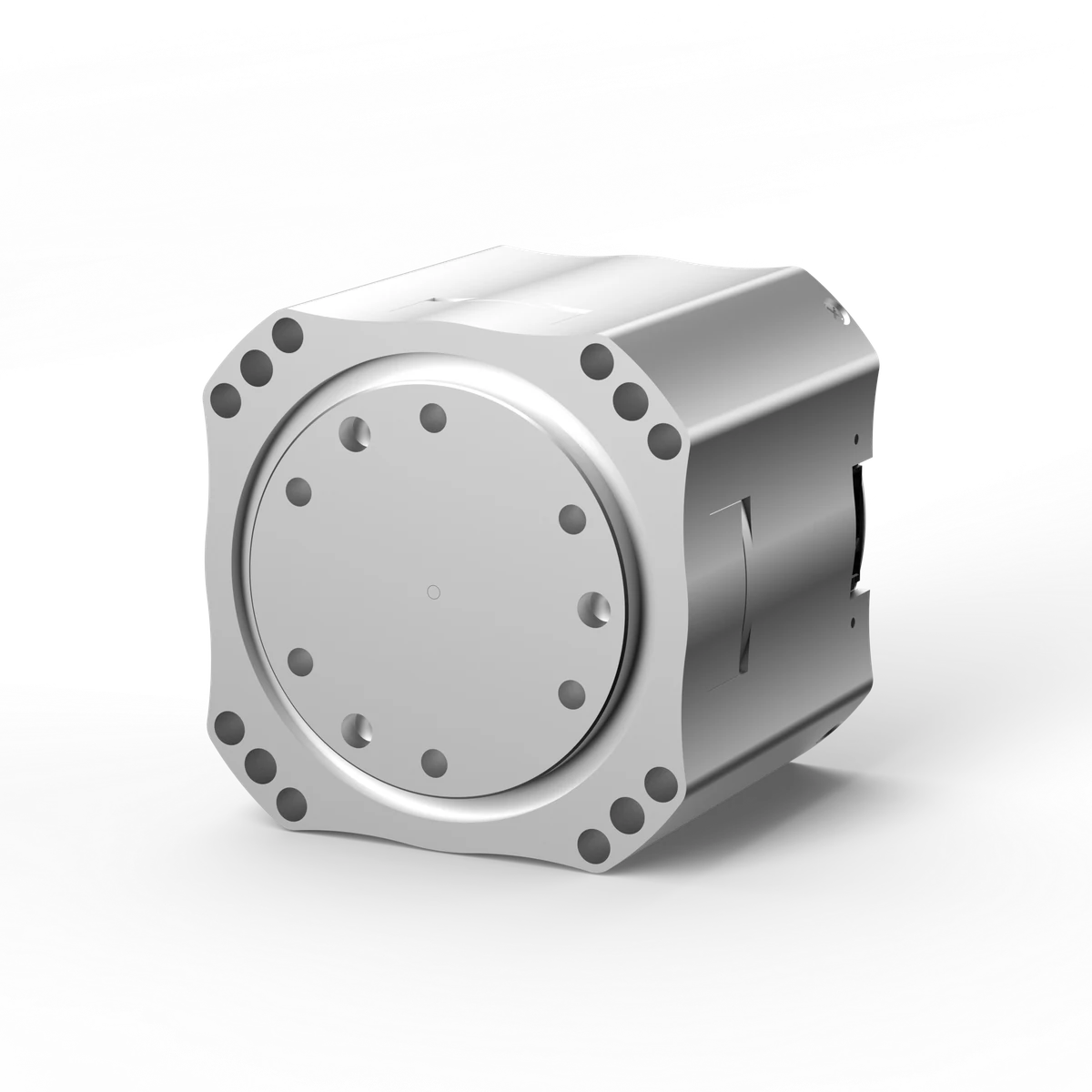
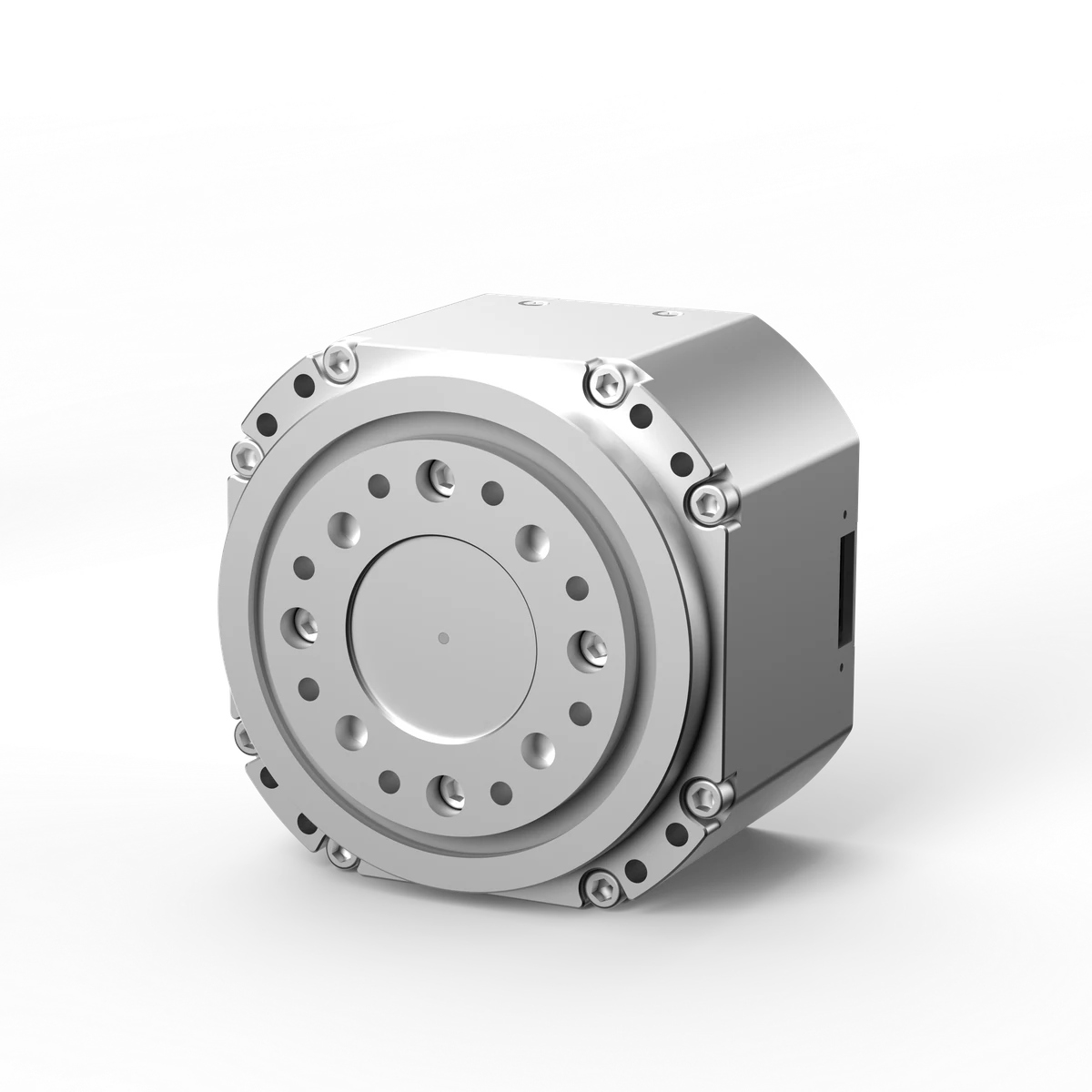
Choose a robot joint from its required operating torque and speed, then check transient loads separately. Stall torque should not be used as a continuous working rating. In the XTIVOR range, XTR-J105 lists 6 N·m rated torque and 21 N·m stall torque; those figures are different specifications, not two interchangeable descriptions of capacity.
This distinction matters when comparing joints for an articulated prototype. A large headline torque figure can hide the conditions that determine whether a module can repeatedly move, hold and accelerate the mechanism you are building.
What each torque figure tells you
| Term | How to use it in a buying decision | What still needs checking |
|---|---|---|
| Rated torque | Start the comparison at the manufacturer's stated operating point | Speed, supply, cooling, ambient temperature and test conditions |
| Stall torque | Identify the separately stated zero-speed torque condition | Current limit, permitted duration, thermal and transmission limits |
| Peak torque | Treat as a separately defined short-duration specification, when provided | Duration, repetition rate and the manufacturer's definition |
| Required application torque | Calculate from the actual mechanism and motion | Gravity, friction, inertia, acceleration and design margin |
Manufacturers do not always use the same conditions for these labels. General motor guidance from maxon distinguishes continuous capability from higher short-duration demands; the selected joint's own motor, gearbox and controller limits remain decisive.
For XTIVOR modules, keep the catalog's label “stall torque” when comparing the supplied data. Do not relabel it “continuous torque” or assign an allowable overload duration that has not been documented.
A worked example: the same mass can create different loads
Imagine a horizontal link holding a 1 kg object. Ignoring everything except that object, the gravitational moment about the joint is approximately mass × 9.81 × horizontal distance.
| Object mass | Horizontal distance | Object-only gravitational torque |
|---|---|---|
| 1 kg | 0.10 m | 0.981 N·m |
| 1 kg | 0.20 m | 1.962 N·m |
| 1 kg | 0.40 m | 3.924 N·m |
These are illustrative calculations, not payload ratings for an XTIVOR joint. A real design also includes the link, gripper, brackets, cables and any downstream actuators; acceleration adds another requirement.
This is why “Can a 2 N·m joint lift 1 kg?” is incomplete. The buyer needs to specify where the load sits, how the mechanism is oriented and how it moves before an actuator can be selected.
Holding a load still requires an operating-limit check
A stationary arm can continue to demand substantial torque. Describe how long the joint holds its position, whether there is external support, and the surrounding thermal conditions.
For example, a demonstration rig that makes a short movement and rests between trials has a different duty cycle from one that holds the same load throughout a recording session. The request for quotation should describe that cycle explicitly rather than simply stating a maximum load.
Ask for the rating conditions and any applicable derating information. Neither a product photograph nor a stall-torque number answers how the supplied module behaves during an extended hold.
Acceleration and repeated cycles need their own calculation
At the joint output, the inertial contribution follows torque = inertia × angular acceleration, with consistent units and the inertia referred to that axis. A faster acceleration target can therefore change the selection even if the workpiece and final speed remain unchanged.
For a varying load, engineers may also evaluate an RMS torque over the cycle, but that calculation does not independently qualify a complete geared joint. Motor cooling, speed-dependent losses, controller limits and mechanical loading still require review. Oriental Motor's sizing procedure discusses load torque, acceleration torque and effective load torque as distinct parts of sizing.
Send the actual motion sequence if it is available. A timeline showing acceleration, travel, holding and rest is more useful than a single peak number without duration.
Compare XTIVOR modules using the same columns
| Module | Rated torque | Stall torque | Rated speed | Listed mass |
|---|---|---|---|---|
| XTR-J102 | 2 N·m | 10 N·m | 40 rpm | 237 g |
| XTR-J105 | 6 N·m | 21 N·m | 50 rpm | 323 g |
| XTR-J107 | 10 N·m | 36 N·m | 50 rpm | 565 g |
| XTR-J110 | 18 N·m | 60 N·m | 50 rpm | 850 g |
The table is a catalog comparison, not a ranking of continuous performance under identical test conditions. Verify the relevant conditions and torque-speed curve before choosing the module.
For a compact mechanism, XTR-J102 may enter the shortlist because of its 237 g listed weight. XTR-J105, XTR-J107 and XTR-J110 offer progressively higher rated-torque classes, with changes in package size and mass that affect the rest of the robot.
Five questions to send with your inquiry
- At what torque and speed must the axis operate during normal movement?
- What is the largest transient load, and how long and how often does it occur?
- How long must the mechanism hold position under load?
- What ambient conditions, mounting arrangement and heat paths are available?
- Which bearing, gearbox and controller limits apply to the delivered revision?
Include the load diagram and quantity so the commercial quotation and technical review refer to the same proposed configuration.
Frequently asked questions
Is stall torque the same as peak torque?
Not necessarily. Preserve the manufacturer's terminology and ask for the conditions behind each value; a peak rating may have a specified duration that a stall figure does not provide.
Can I select a joint just below its stall torque?
That is not a valid continuous-duty selection method. Check the required operating cycle against documented limits, including thermal and mechanical constraints.
Will the highest-rated joint always be the best choice?
It may add size, weight and power requirements. Compare the complete operating envelope and the effect on upstream axes.
Discuss your operating cycle with XTIVOR
Explore servo joint modules or robot joint prototyping. Email jennie@xtivor-robot.com with the required torque, speed, cycle and quantity for exact or volume pricing.